Model. Entre Matèries
CHRONOTOPIC MEMORY
To meet the goals of the Paris Agreement for decarbonization and energy transition, cities must reassess their relationship with materials, optimizing processes to maximize their use and value, reduce their footprint, and extend the life of everything useful. The commission for “Model. Festival d’arquitectures de Barcelona,” under the theme "Entre-Matèries," reflects on the flows and exchanges of matter essential for the functioning of cities as complex systems. It explores the full potential of upcycling and the logic of circularity and reuse.
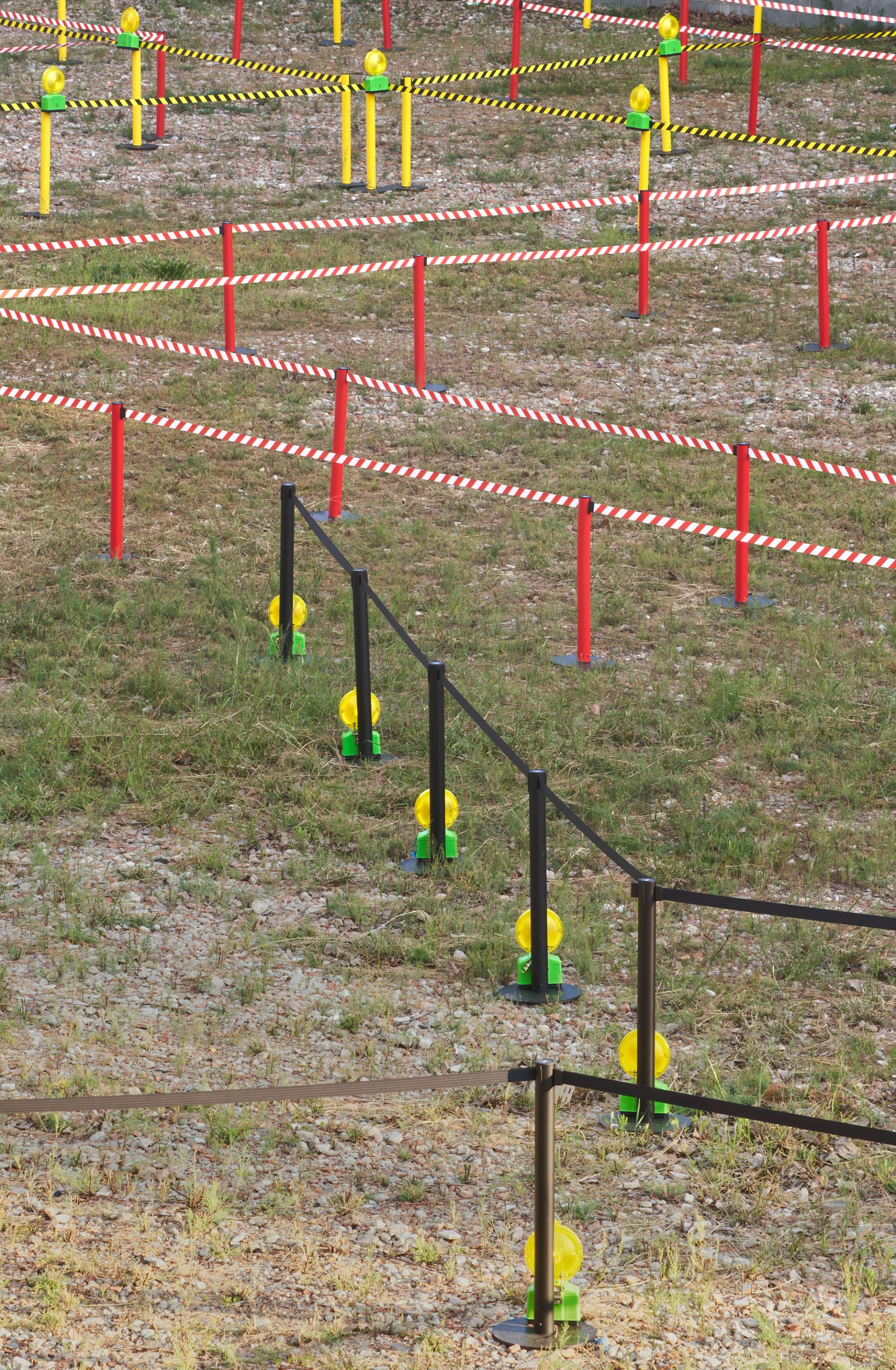
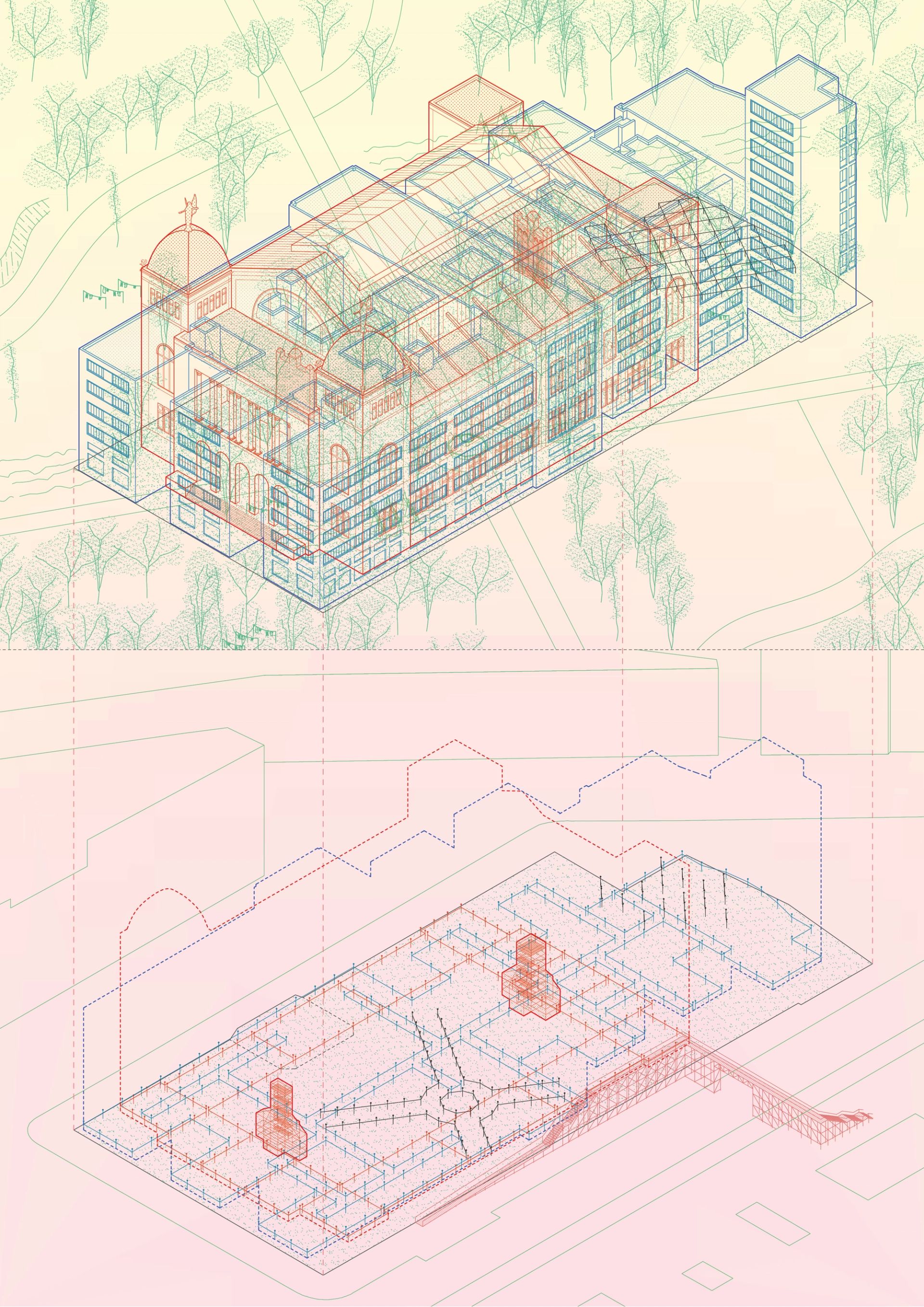
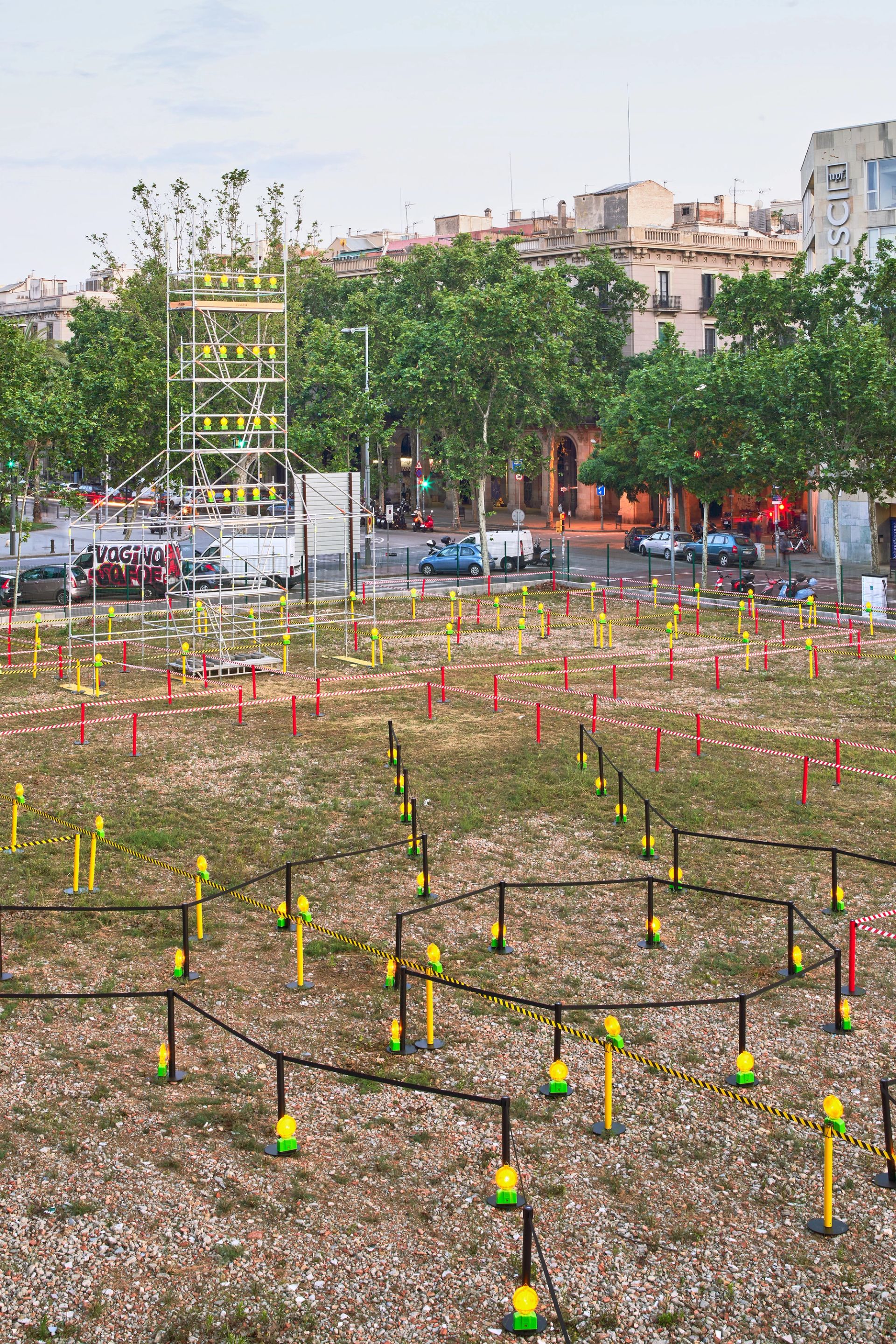
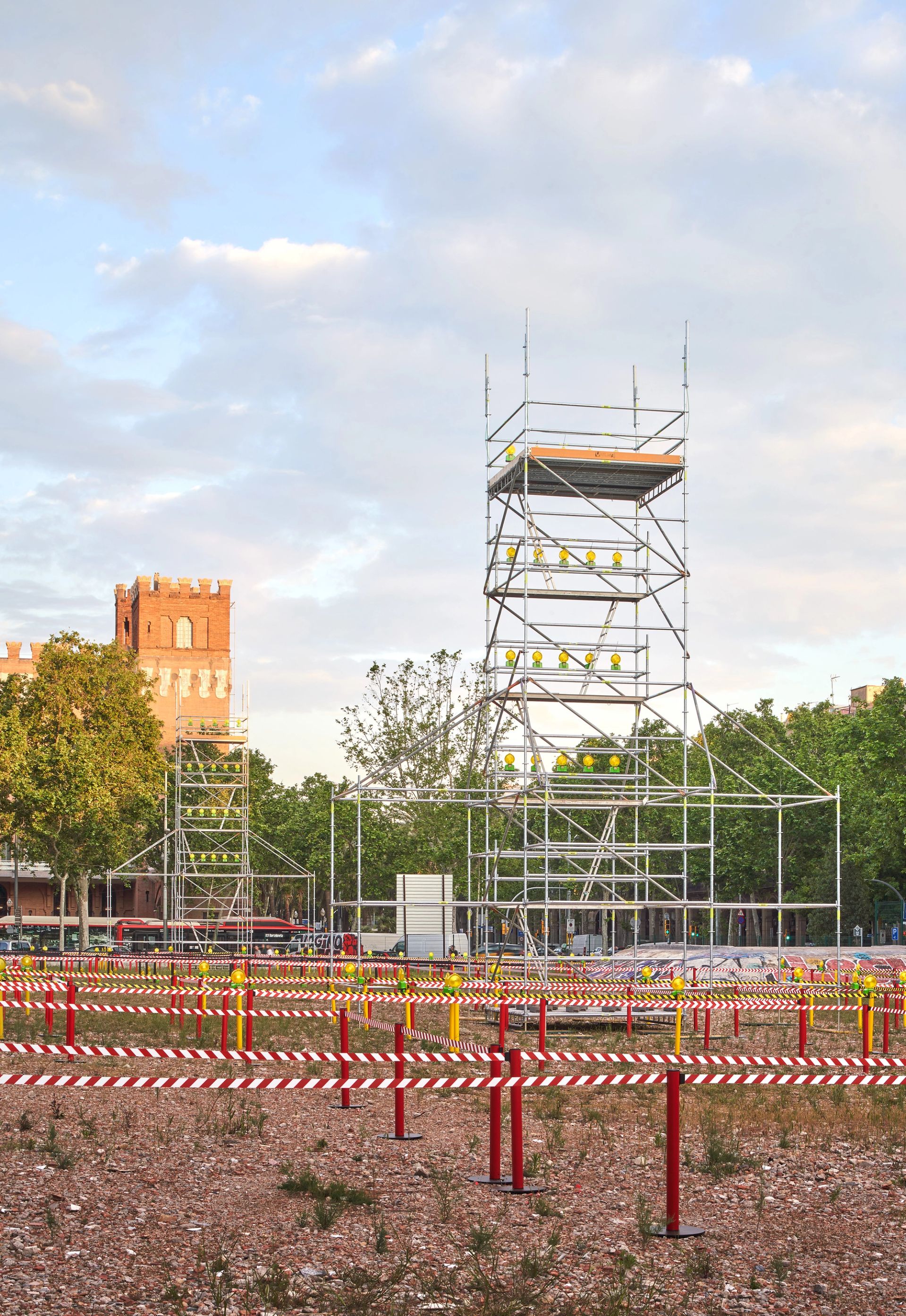
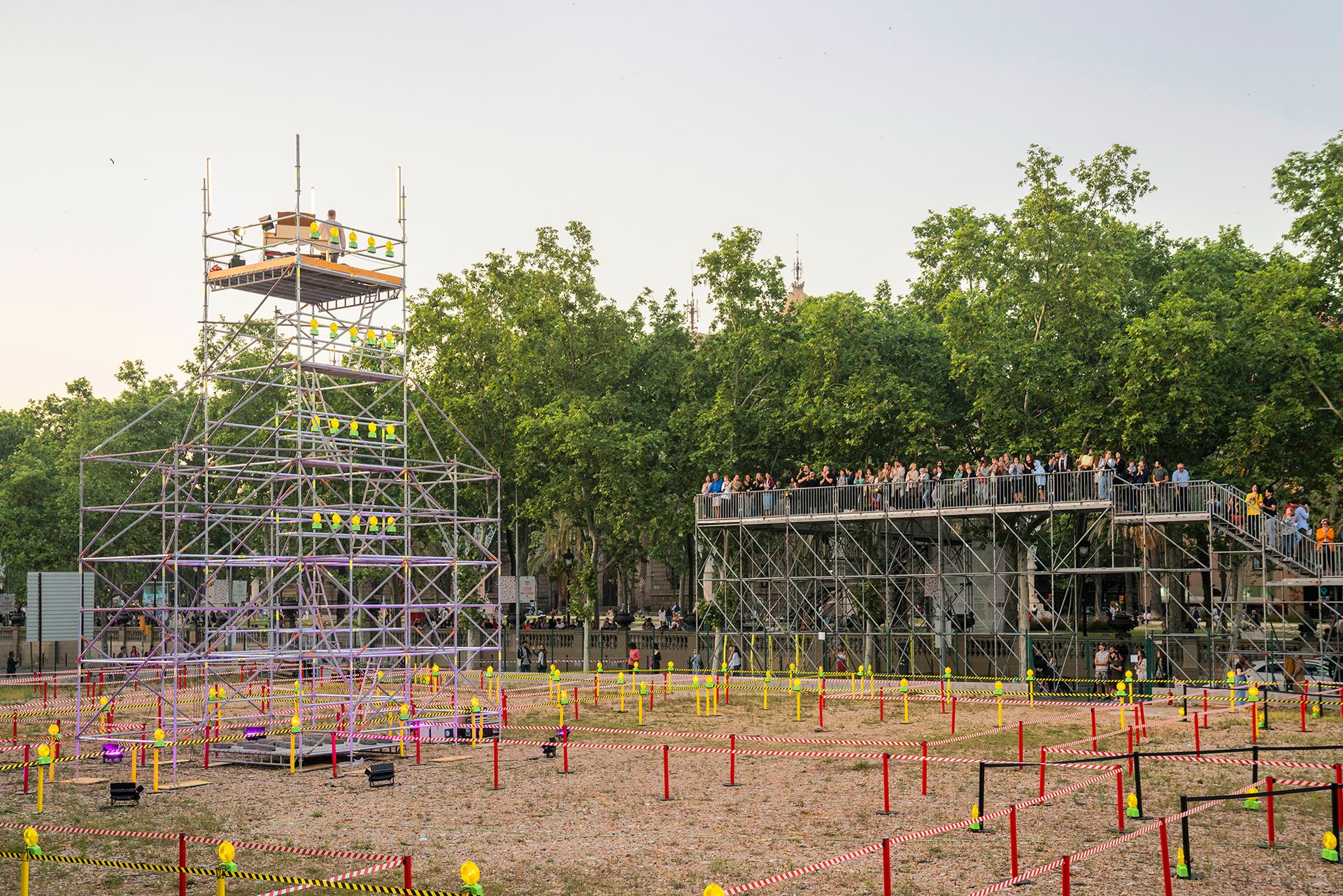
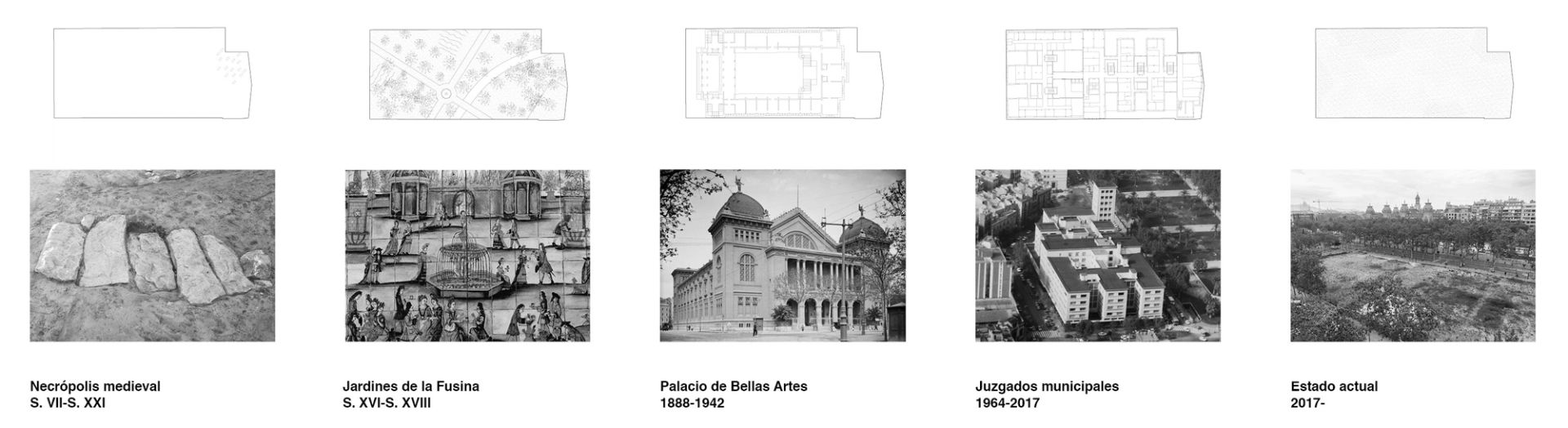
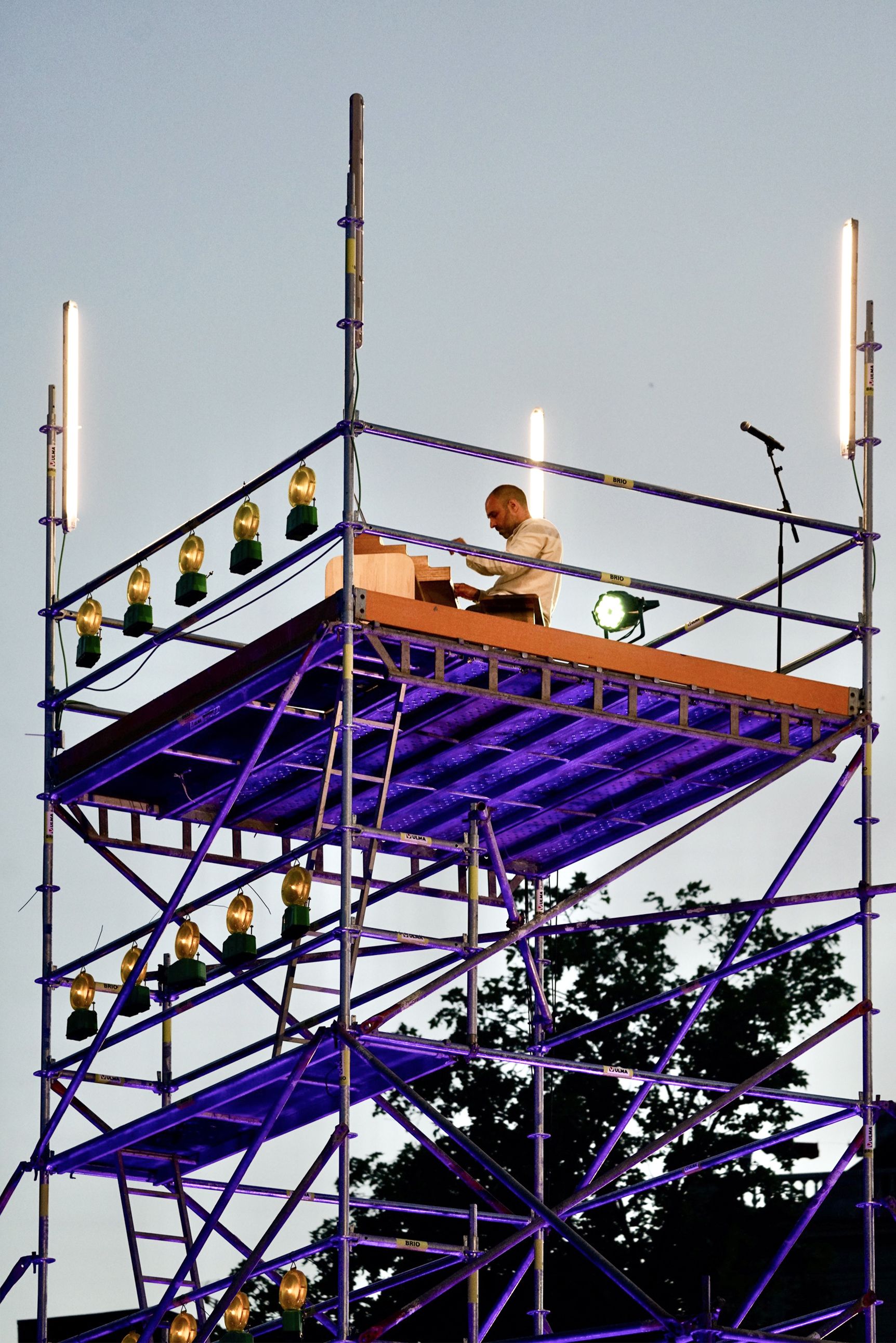
The site chosen for this intervention is the former courthouse of Barcelona, where remnants of its demolition are still visible. The "Chronotopic Memory" device lifts and juxtaposes, at a real scale, the architectures and materials that disappeared between the 7th century and 2017 at these coordinates. These include the Medieval Necropolis (7th century - 2017), the Courthouse Building (1966 - 2017), Fusina Gardens (16th century - 1714), and the Fine Arts Palace (1888 - 1944), with its iconic double electric organ. This organ will be reconstructed in its original position, and on the closing day, organist Juan de la Rubia will perform pieces on a keyboard set up for the event.
Chronotopic Memory aims to reflect on the material flow of past and future architectures, based on three key questions:
Reprogram: Can we value and reprogram demolished architectures for new uses, instead of just demolishing them? What new programs could house the Fine Arts Palace or Old Courts?
Recirculate: Can we protocol demolitions, classifying and quantifying materials for reuse in other buildings or projects?
Reactivate: Can vacant lots be activated temporarily or permanently to foster a new interdependence among various species, contributing to an urban ecosystem?